-P, -S, -T, -G in SMS: Meaning of SMS Header Suffixes
What -P, -S, -T and -G at the end of an SMS header mean, why TRAI added them in 2025, examples of each, and what businesses must do.
 Bulk SMS India Team 4 min read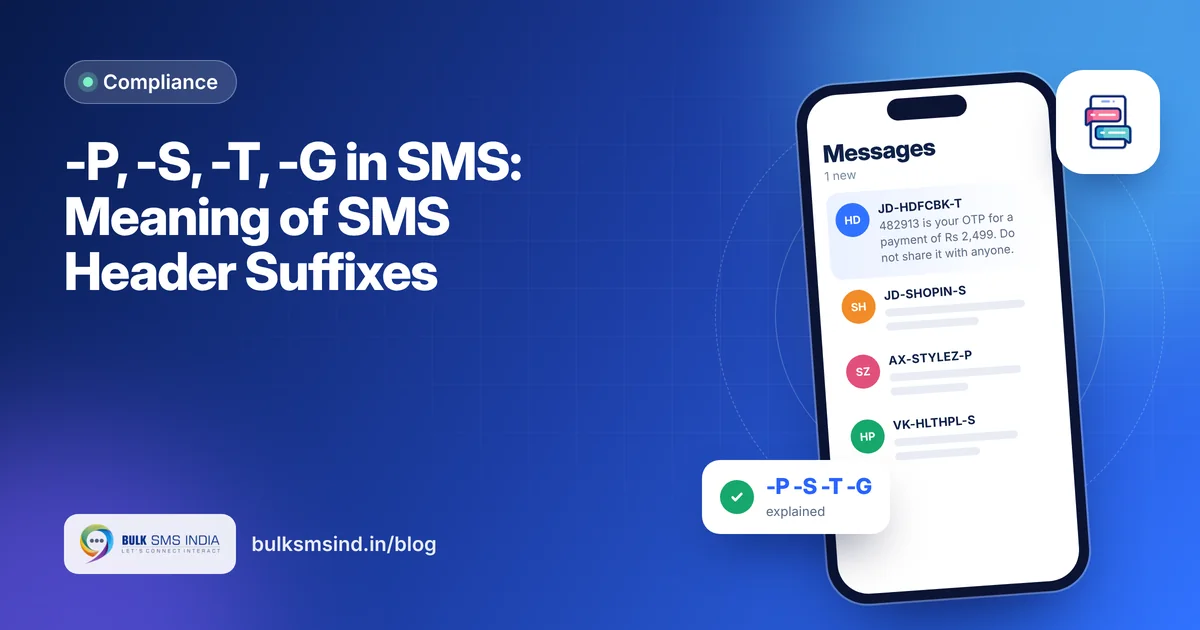
Since May 2025, SMS headers in India end with an extra letter: JD-HDFCBK-T, VM-SWIGGY-S, AD-MYNTRA-P. That last letter tells you what kind of message it is before you even open it.
Short answer: -P means promotional, -S means service, -T means transactional and -G means government. The suffix is added automatically, based on the category of the template the sender registered on DLT.
The four SMS suffixes at a glance
| Suffix | Type | What you will see | Example header |
|---|---|---|---|
| -P | Promotional | Offers, sales, discounts, new launches | AD-MYNTRA-P |
| -S | Service | Order updates, reminders, alerts, bills | VM-SWIGGY-S |
| -T | Transactional | OTPs and bank transaction alerts | JD-HDFCBK-T |
| -G | Government | Messages from government departments | VK-GOVSMS-G |
Brand names in these examples show the format only.
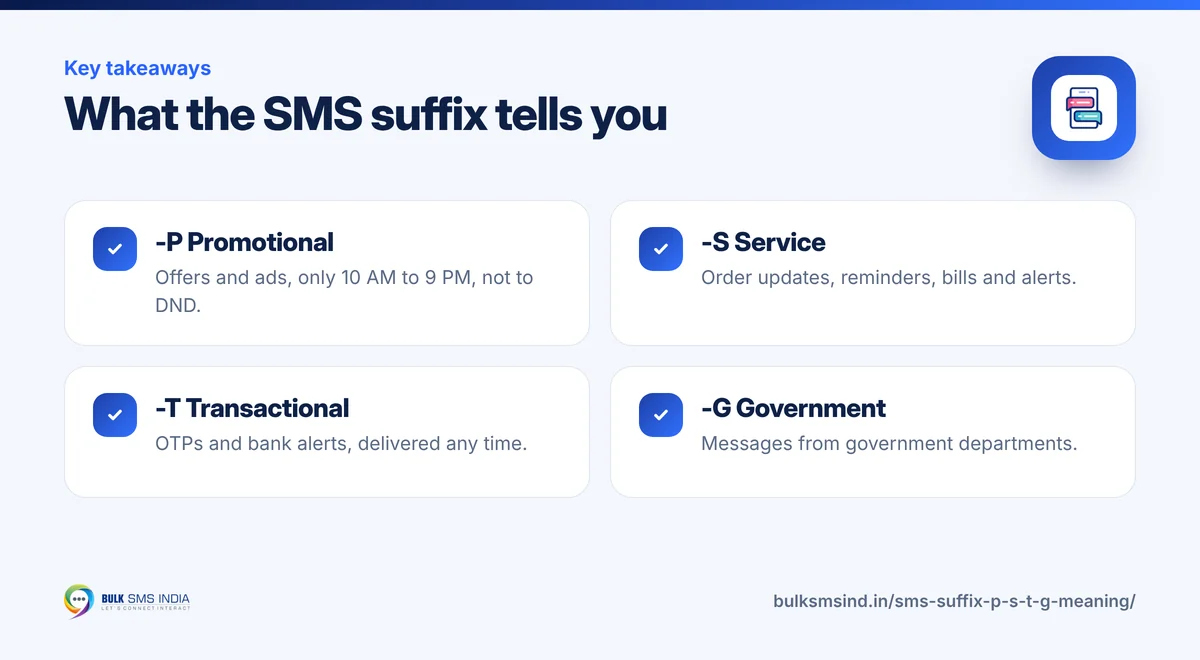
-P: promotional SMS
A -P message is marketing: a festive sale, a new product, a coupon code. These rules apply:
- They are not delivered to numbers on the DND list for that category.
- They can be sent only between 10 AM and 9 PM.
- They usually carry an opt-out option.
If you see -P, you can safely treat the message as an advertisement.
-S: service SMS
A -S message is information about something you already use or bought: a delivery update, an appointment reminder, a bill due date, a policy renewal notice. Service messages reach DND numbers because the customer needs them.
Businesses must not hide offers inside service templates. A message that mixes "your order is shipped" with "get 20% off on your next order" should be registered as promotional.
What your customer sees
- DLT-approved sender ID and template
- Submitted to operators in real time
- Live delivery report for every number
- Works on every mobile phone
-T: transactional SMS
-T is the strictest category. It is meant for OTPs and bank transaction alerts, such as "Rs 5,000 debited from your account". These messages are delivered at any time of day, including to DND numbers, and operators give them high priority.
-G: government SMS
-G marks messages from government bodies: public alerts, scheme updates, Aadhaar or tax notices. Seeing -G at the end is a quick sign that the sender is registered as a government entity.
Why TRAI added suffixes
TRAI introduced the suffixes through an amendment to the Telecom Commercial Communications Customer Preference Regulations (TCCCPR), and operators started showing them from around May 2025. The aim is simple:
- Customers can tell an ad from an important alert at a glance.
- Spam is easier to report, because the type is visible on the header.
- Businesses are pushed to register templates correctly, since the wrong category is now visible to every customer.
What changed for businesses
If you send bulk SMS, the suffix comes from your DLT template category, not from your SMS panel. To get it right:
- Register templates in the right category. OTPs as transactional, order and account updates as service, offers as promotional.
- Do not mix content. A promotional line inside a service template can get the template rejected or the message blocked.
- Check old templates. Templates registered earlier as "service explicit" are treated as promotional by default under the new format.
- Use one clear sender ID. Customers learn to trust a header they see often.
Not sure which category your message belongs to? Read promotional vs transactional SMS or the DLT registration guide.
How the full header reads
Take VM-BSMSIN-S as an example:
- V – Vodafone Idea delivered it
- M – through the Mumbai circle
- BSMSIN – the sender ID registered by the brand
- S – it is a service message
For the first two letters in detail, see SMS header meaning: VM, AD, JD.
Frequently asked questions
What does -P mean in SMS?
-P means the message is promotional, such as an offer or advertisement. These messages are sent only between 10 AM and 9 PM and do not reach numbers that have blocked promotional SMS.
What does -S mean at the end of an SMS header?
-S means a service message, like an order update, reminder or bill alert, sent by a business you already deal with.
What does -T mean in SMS?
-T means transactional, used for OTPs and bank transaction alerts. These messages are delivered at any time, including to DND numbers.
What does -G mean in SMS?
-G means the SMS was sent by a government department or body.
Who decides the suffix on a business SMS?
The suffix is added automatically from the category of the template the business registered on DLT. The business cannot type it into the message.
When did TRAI start adding SMS suffixes?
The suffixes began appearing on SMS headers across India from around May 2025, under the amended TCCCPR rules.
Ready to get started?
Talk to our team about bulk SMS service — setup help, DLT guidance and test credits.
Messaging specialists with 10+ years of experience (since 2016) helping 15,000+ Indian businesses with bulk SMS, WhatsApp, RCS and voice communication.