SMS Sender ID Rules for the USA and Australia (2026): A Guide for Indian Businesses
SMS sender ID rules for the USA and Australia in 2026: 10DLC, toll-free and short codes, the ACMA Sender ID Register, consent and opt-out rules, explained simply.
 Bulk SMS India Team 5 min read
Sending SMS from India to customers in the USA or Australia is easy to start, but each country has its own rules about who the message comes from. Get the sender ID wrong and your messages are filtered, or arrive marked "Unverified". This guide explains the 2026 rules in plain language.
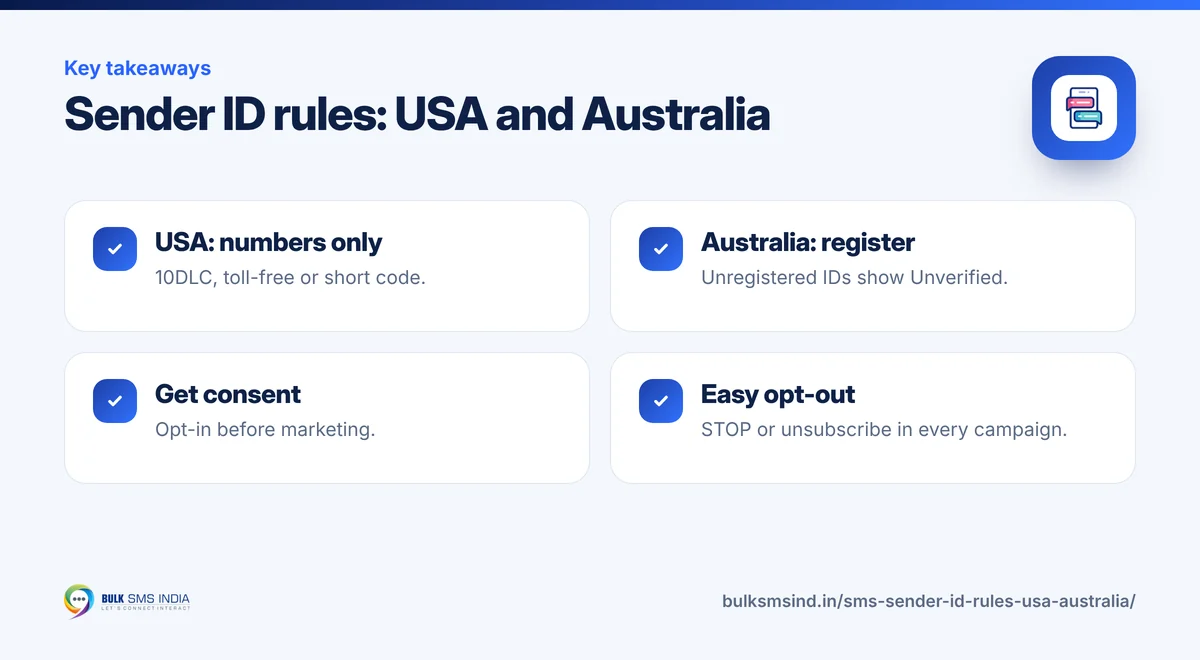
Quick answer: - USA: brand-name sender IDs are not supported. Send from a registered 10DLC, toll-free or short code number, get opt-in consent first and honour STOP replies. - Australia: brand-name sender IDs are allowed, but since 1 July 2026 they must be on the ACMA SMS Sender ID Register, or the message shows "Unverified". Commercial messages must follow the Spam Act.
What is a sender ID?
A sender ID is what appears as the "from" on a text message. It can be:
- Alphanumeric: a brand name such as "ACME" (in India this is your DLT header, like JD-ACMEIN-T).
- Long code: a normal phone number.
- Short code: a 5–6 digit number.
- Toll-free: a toll-free number, such as +1 833 in the USA.
Each country decides which types are allowed for business messages.
USA: sender ID rules
Brand names don't work
The USA does not support alphanumeric sender IDs for standard business (A2P) SMS. Every message goes from a phone number, so put your brand name in the message text: "ACME: your order has shipped."
Three registered number types
| 10DLC | Toll-free | Short code | |
|---|---|---|---|
| What it is | Standard 10-digit US number | 8XX number, e.g. +1 833 | 5–6 digit number |
| Registration | Brand and campaign registration | Toll-free verification | Short code application |
| Best for | Ongoing alerts and marketing | OTPs, alerts, moderate volume | Very high volume |
| Setup time | Days to a few weeks | Days to a few weeks | Several weeks or more |
| Cost | Lowest | Low | Highest |
US carriers filter or block business traffic from numbers that are not registered, so registration comes before your first campaign.
Consent and opt-out
Under the TCPA and carrier rules you need a documented opt-in before the first message. Every program must honour STOP and similar replies. Carriers also filter restricted content, often called SHAFT (sex, hate, alcohol, firearms, tobacco), and high-risk financial offers.
Tips for the USA
- Register early; allow a few weeks before launch.
- Keep messages close to the samples you registered.
- Add "Reply STOP to opt out" to marketing messages.
- Schedule for the customer's local time zone.
Australia: sender ID rules
Brand names are allowed, if registered
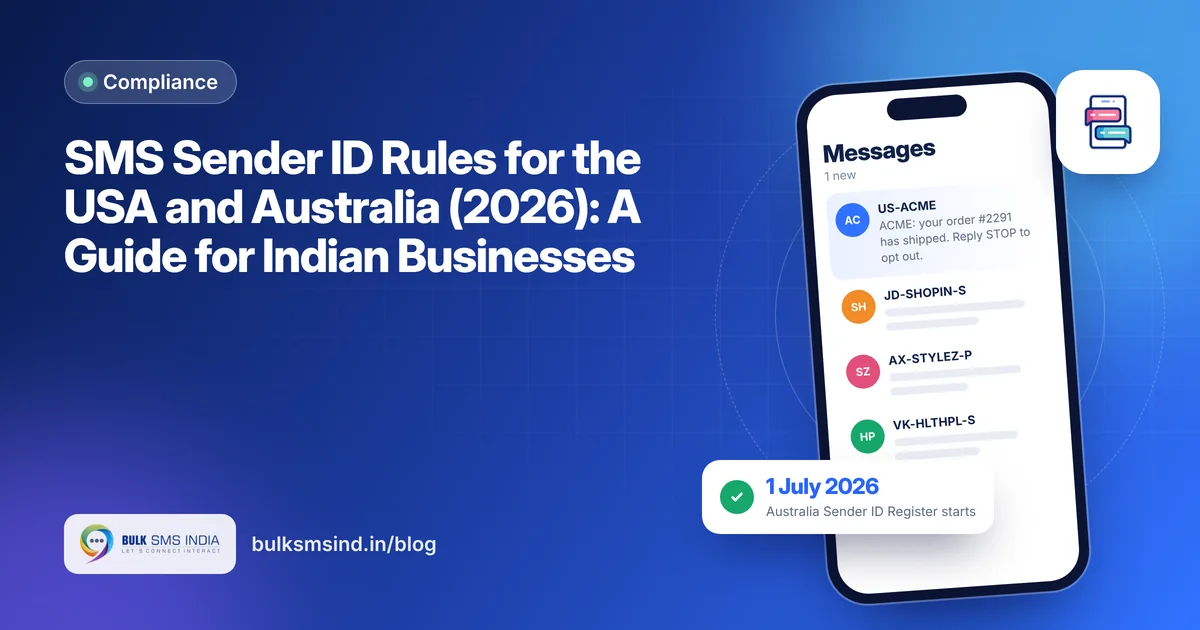
Australia allows alphanumeric sender IDs, which customers trust more than random numbers. Since 1 July 2026, they must be on the ACMA SMS Sender ID Register. Messages from brand sender IDs that are not registered are not blocked, but the sender shows as "Unverified", and people are far more likely to ignore or delete them.
Registration goes through a telco or messaging provider that takes part in the register.
Phone numbers are not covered
If you send from a mobile or virtual number, the register doesn't apply. Numbers also let customers reply, which alphanumeric sender IDs cannot.
| Alphanumeric sender ID | Mobile or virtual number | |
|---|---|---|
| Shows as | Your brand, e.g. ACME | A phone number |
| Register | ACMA SMS Sender ID Register | Not covered |
| Replies | One-way | Two-way |
| If not registered | Shown as "Unverified" | Not applicable |
Spam Act basics
Commercial messages to Australian numbers must: 1. be sent with the recipient's consent, 2. clearly identify your business, and 3. include a working unsubscribe option.
What your customer sees
- DLT-approved sender ID and template
- Submitted to operators in real time
- Live delivery report for every number
- Works on every mobile phone
USA vs Australia vs India at a glance
| India | USA | Australia | |
|---|---|---|---|
| Brand name as sender | Yes, DLT header | No | Yes, if registered |
| Registration | DLT entity, headers, templates | 10DLC / toll-free / short code | Sender ID Register |
| Consent | Needed for promotional SMS | Needed before first message | Needed for commercial messages |
| Opt-out | DND and opt-out rules | STOP replies | Unsubscribe in every message |
For Indian rules, see our TRAI SMS regulations guide.
How Bulk SMS India helps
We send international SMS from the same panel, SMS API and SMPP you use for India, and our team explains the right sender type before your first campaign:
- Send SMS to USA: 10DLC, toll-free and short code numbers.
- Send SMS to Australia: registered brand sender IDs or numbers.
- International SMS: our full international service.
This guide is general information, not legal advice. Rules change, so check the current requirements for your business before sending.
Frequently asked questions
Can I use my company name as the sender ID in the USA?
No. US business SMS goes from registered phone numbers: 10DLC, toll-free or short codes. Put your company name at the start of the message instead.
What happens if my Australian sender ID is not registered?
Since 1 July 2026, messages from unregistered alphanumeric sender IDs are shown as "Unverified" instead of your brand name. They are still delivered, but people are much less likely to trust them.
Do I need consent to text customers in the USA and Australia?
Yes. The USA needs documented opt-in before the first message, and Australia's Spam Act requires consent for commercial messages. Both need a working opt-out.
Which US number type is best for OTPs?
Toll-free numbers are a common choice for OTPs and alerts at moderate volumes. Very high volumes may need a short code.
Can customers reply to my SMS?
In Australia, not to an alphanumeric sender ID; use a number for two-way messages. In the USA, customers can reply to 10DLC, toll-free and short code numbers.
Ready to get started?
Talk to our team about WhatsApp marketing — setup help, DLT guidance and test credits.
Messaging specialists with 10+ years of experience (since 2016) helping 15,000+ Indian businesses with bulk SMS, WhatsApp, RCS and voice communication.